
The Career Path Many Have Taken but Few Have Chosen

How many people do you know who set out to become a sales compensation professional?
Over the years, I’ve had the opportunity to get to know some incredibly talented people in this profession. I’ve heard their stories, learned about their careers, and developed lasting friendships with many of them. What continues to amaze me is how few of these people intentionally chose this career.
From hallway conversations to looking for a change or just simply “being in the right place at the right time”. The people in these roles come from anywhere. From Finance to Human Resources, IT and Sales Operations. Maybe someone was a great analyst and had the adjacent skills. Someone else had a keen understanding of how sales works, so they were asked to design an incentive plan.
There was a business problem that needed to be solved, and they had the skills, curiosity or willingness to take it on.
Then, somewhere along the way, what started as a job became a career.
But what if we changed that narrative? What if sales compensation became a profession that talented people actively pursued?
What if there was a career path framework that could lead all the way to the C-Level?
And why should business leaders care?
A Snapshot of the Economics
What we know today is that incentive compensation is one of the largest variable expenses a company invests in year over year. Ranging anywhere from 5% to upwards of 20%, that’s a lot of investment to manage.
Consider a company with $1 billion in annual revenue. Let’s assume to keep the math easy that its Compensation Cost of Sales is 10% of revenue, or $100 million. Assuming a weighted average pay mix of 60% base salary and 40% variable compensation, the company is investing $40 million annually in sales incentives.
That’s $40 million intended to motivate a sales organization, drive revenue growth and support the company’s business strategy.
Is the company getting the intended return on that investment?
Who is responsible for understanding whether it is? And how much has the company invested in developing the people whose recommendations and decisions influence that $40 million?
We spend considerable time designing sales compensation plans, implementing technology, tools and dashboards and administering the plans while ensuring salespeople are paid accurately. All of that is important. But I would argue that we don’t spend nearly enough time developing the organizational capabilities and the professionals who can help us optimize that investment.
It’s a Complex Role
Consider the different stakeholders involved in sales compensation.
Sales leadership wants to motivate its sales organization, achieve growth objectives and execute its sales strategy. Finance wants to ensure fiscal responsibility and profitable growth. Human Resources is concerned with attracting and retaining talent, competitive pay and internal equity. The CEO is looking at the broader strategic direction and financial health of the company.
All have legitimate priorities, and those priorities don’t always align.
An experienced, empowered sales compensation professional can bring an objective perspective to these conversations. Someone who understands the business, the economics of the incentive program and the behaviors the company is trying to drive. Someone who can navigate across organizational boundaries, challenge assumptions and help leaders understand the implications of their decisions.
Regardless of where this person reports, their ultimate responsibility should be to the business.
It’s Time to Professionalize the Function
Over the past several years, I’ve been working with members of SalesGlobe’s Sales Compensation Leadership Forum to better understand the challenges and opportunities facing this profession.
Our work, which became the foundation for Section 6 of Sales Compensation for Results, has reinforced my belief that there is a significant opportunity for companies to rethink how they approach sales compensation as a discipline.
It starts with being intentional about the organizational structure, the capabilities required, the development of talent and the empowerment of the people doing the work.
It also means creating meaningful career pathways. Not simply because it’s good for the individual, but because developing and retaining this expertise is good for the business.
And as AI changes the way we work, the ability to exercise sound business judgment, solve complex problems, communicate effectively and influence decisions will become increasingly important.
Technical expertise is essential. But it is what we do with that expertise that can make the greatest difference.
Changing the Narrative
Over the coming year, I’ll be exploring what it means to professionalize sales compensation, both from the perspective of the business leader and from that of the sales compensation professional.
 We’ll look at the economics of incentive compensation, organizational structure, governance, career progression, the changing role of technology and the capabilities required to become a trusted business advisor.
My hope is that we can change how organizations think about this profession, help companies realize greater value from their incentive compensation investments, and create a rewarding career that more people intentionally choose.
In the meantime, I’d love to hear from you.
If you’re a sales compensation professional, how did you find your way into the profession? And what made you decide to stay?
If you’re a business leader, how intentionally are you developing the people who influence one of your company’s most significant commercial investments?

Go Deeper with Sales Compensation for Results
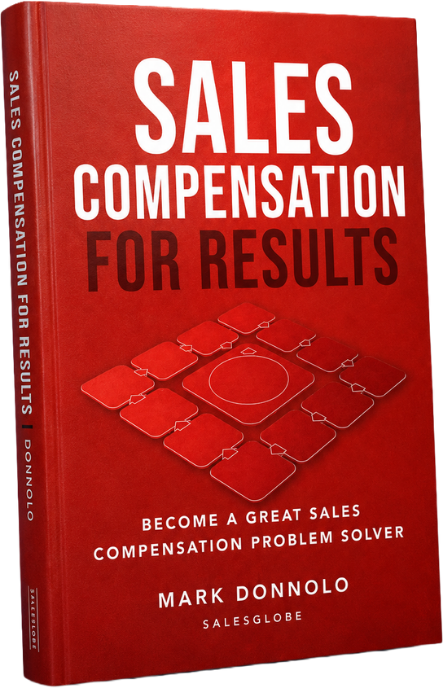 Career Pathing is just one part of building a sales compensation journey that works. In his new book, Sales Compensation for Results: Become a Great Sales Compensation Problem Solver, SalesGlobe CEO Mark Donnolo provides practical frameworks, real-world examples, and a problem-solving approach to help leaders design, evaluate, and improve sales compensation programs.
The book goes beyond repeating the same solutions to common compensation challenges. It focuses on how to think through the problems behind the plan, from aligning compensation with strategy to designing the mechanics, setting effective quotas, and evaluating results.
If you’re responsible for designing, managing, or improving a sales compensation program, Sales Compensation for Results provides a practical resource for approaching those decisions with a stronger framework and getting better results from your plan.
SalesGlobe is a leading sales effectiveness and data-driven creative problem-solving firm. We specialize in helping Global 1000 companies solve their toughest growth challenges and helping them think in new ways to develop more effective solutions in the areas of sales strategy, sales organization, sales process, sales compensation, and quotas. We wrote the books on sales innovation with The Innovative Sale, What Your CEO Needs to Know About Sales Compensation, and Quotas! Design Thinking to Solve Your Biggest Sales Challenge.


Chief Operating Officer and Partner at SalesGlobe
She hosts the podcast, “Riding the Big Wheel,” a platform for women in leadership to share their personal and professional stories and insights.
“We elevate your team’s altitude and new thinking to develop fresh perspective, ideas, and initiatives.”