
Sales Compensation Training: The Missing Link Between Compensation Strategy and Sales Performance

Organizations invest significant time and resources into designing sales compensation plans intended to motivate sellers, reinforce business priorities, and drive revenue growth. Yet even a well-designed plan can fall short when the people responsible for implementing and managing it lack the knowledge to connect compensation decisions to business results.
Sales compensation is more than a mechanism for rewarding performance. It’s one of the strongest connections between business strategy and frontline sales behavior.
As we often emphasize at SalesGlobe, the sales organization will go where the compensation plan leads.
That’s why sales compensation training should extend beyond commission calculations and plan administration. It should develop the strategic thinking, analytical skills, and practical expertise organizations need to turn compensation investments into measurable business outcomes.
Start With Strategy, Not Compensation Mechanics
One of the most common mistakes organizations make is jumping directly into compensation mechanics before establishing what the business needs to accomplish.
Effective compensation design begins with C-Level Goals and clearly defined sales roles.
Is the organization focused on acquiring new customers, improving retention, expanding existing accounts, or increasing profitability? Which sales roles and activities will support those objectives?
These questions must be answered before determining how sellers should be compensated.
SalesGlobe’s Revenue Roadmap connects market insight, sales strategy, customer coverage, and enablement. The Sales Compensation Diamond builds on this foundation through a 12-step design process that frames the plan, links pay and performance, aligns the team and financials, and establishes governance.
Understanding this sequence helps compensation professionals avoid designing incentive plans in isolation from the broader sales operating model.
Moving From Administration to Strategic Decision-Making
Sales compensation professionals spend considerable time calculating payouts, tracking performance, managing exceptions, and administering plans.
While these responsibilities remain essential, organizations increasingly need professionals who can serve as strategic problem solvers.
Consider pay mix, the balance between base salary and target incentive compensation.
SalesGlobe’s Pay Mix Continuum positions roles from service delivery and operational responsibilities on one end to new customer acquisition on the other.
Roles involving complex solutions, longer sales cycles, team-based selling, or significant operational responsibilities generally lean toward higher base salaries. Roles focused on individual selling, shorter sales cycles, and new customer acquisition typically carry greater incentive opportunities.
A new-business hunter might have a 50/50 base-to-incentive mix, while a major-account manager focused on retention could have a 70/30 structure.
However, these ratios are reference points, not universal rules.
Effective pay-mix decisions require evaluating five categories: revenue responsibility, influence on purchasing decisions, attributes of the sale, role priorities, and talent market conditions. Factors such as sales cycle length, product breadth, customization, operational focus, and specialized talent availability help determine the appropriate structure.
Sales compensation training gives professionals the analytical foundation to evaluate these factors rather than relying on job titles or historical practices.
Why Simplicity and Differentiation Matter
A compensation plan can be strategically sound and still fail to influence seller behavior.
Two essential design principles are simplicity and meaningful performance differentiation.
If sellers cannot understand how their actions translate into compensation, the plan loses motivational value. Excessive measures, complicated payout formulas, and unclear expectations create confusion.
At the same time, a plan that rewards average and exceptional performance too similarly may fail to motivate or retain top performers.
Effective training helps professionals balance these priorities, creating plans that sellers understand while ensuring stronger performance generates meaningfully greater rewards.
Understanding the Connection Between Quotas and Compensation
Quota setting illustrates why compensation expertise must extend beyond the incentive plan itself.
Although compensation teams may not directly establish quotas, their plans depend heavily on how those quotas are developed.
Consider an organization experiencing widespread quota attainment problems.
Leadership might respond by reducing targets or modifying incentive rates. However, the underlying issue could involve territory potential, account assignments, market conditions, or sales capacity.
Without understanding quota-setting methodologies, compensation professionals risk addressing symptoms rather than causes.
Training develops the ability to evaluate quota realism, pressure-test performance thresholds, and understand how accelerators interact with attainment expectations.
Governance and Change Management Turn Plans Into Results
Designing a compensation plan is only part of the process. Organizations must also establish the structure needed to manage it consistently.
Governance serves as the constitution of the compensation program, defining how decisions are made, exceptions are handled, and changes are evaluated.
Change management provides the bridge between plan design and execution.
Sales managers must understand the plan’s objectives to reinforce intended behaviors. Sellers need clear communication about performance expectations and earning opportunities.
Training should therefore address implementation, communication, governance, and ongoing evaluation alongside plan design.
A compensation plan is the blueprint. Governance and change management turn that blueprint into operational reality.
Measuring the Return on Sales Compensation
Sales compensation represents a significant investment. Understanding its return requires evaluating both the productivity it generates and the resources needed to support it.
SalesGlobe defines the relationship through a straightforward formula:
Sales Compensation ROI = Productivity Value / Resource Cost
Productivity value includes revenue generated through customer retention, expansion within existing accounts, and new customer acquisition. Profitability may also be considered when sellers influence pricing or costs.
Nonfinancial measures, including customer satisfaction, employee engagement, product success, and brand awareness, can provide additional indicators of effectiveness.
Resource cost extends beyond base salaries and incentive payments. It also includes investments in sales processes, talent acquisition, technology, training, leadership, and sales operations.
Evaluating this relationship requires more than calculating a single ratio.
SalesGlobe’s seven-question framework encourages organizations to examine why they expect to grow, how compensation supports that growth, where revenue opportunities exist, who will deliver results, when milestones should be achieved, how plans will be communicated, and what other business factors influence success.
These questions reinforce an important principle: compensation effectiveness cannot be evaluated independently of the broader sales organization.
Training helps professionals connect these variables, assess compensation investments, and identify opportunities to improve sales productivity.
Building Stronger Sales Compensation Capabilities
Sales compensation sits at the intersection of sales leadership, finance, HR, and revenue operations. Its effectiveness depends on these functions working toward shared objectives.
When teams lack a common understanding of compensation principles, even technically sound plans can produce unintended results.
Training establishes a shared foundation for evaluating decisions, identifying problems, and adapting programs as business conditions change.
More importantly, it helps organizations build internal expertise rather than repeatedly relying on trial and error.
The goal isn’t simply to create better compensation administrators. It’s to develop better compensation problem solvers.
A strong sales compensation plan starts with the right strategy. Strong sales compensation training gives organizations the knowledge and discipline to execute that strategy, measure its impact, and continuously improve results.
Go Deeper with Sales Compensation for Results
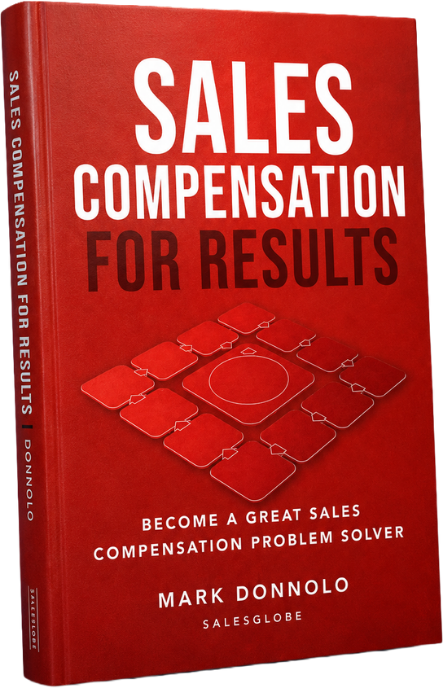 Quota setting is just one part of building a sales compensation program that works. In his new book, Sales Compensation for Results: Become a Great Sales Compensation Problem Solver, SalesGlobe CEO Mark Donnolo provides practical frameworks, real-world examples, and a problem-solving approach to help leaders design, evaluate, and improve sales compensation programs.
The book goes beyond repeating the same solutions to common compensation challenges. It focuses on how to think through the problems behind the plan, from aligning compensation with strategy to designing the mechanics, setting effective quotas, and evaluating results.
If you’re responsible for designing, managing, or improving a sales compensation program, Sales Compensation for Results provides a practical resource for approaching those decisions with a stronger framework and getting better results from your plan.

SalesGlobe is a leading sales effectiveness and data-driven creative problem-solving firm. We specialize in helping Global 1000 companies solve their toughest growth challenges and helping them think in new ways to develop more effective solutions in the areas of sales strategy, sales organization, sales process, sales compensation, and quotas. We wrote the books on sales innovation with The Innovative Sale, What Your CEO Needs to Know About Sales Compensation, and Quotas! Design Thinking to Solve Your Biggest Sales Challenge.


SalesGlobe Sage is a consultant and problem solver who is an expert in sales compensation, quotas, enablement, and performance.
To learn more about SalesGlobe Sage contact us at info@salesglobe.com